Why the Milky Way Might Look “Paused”
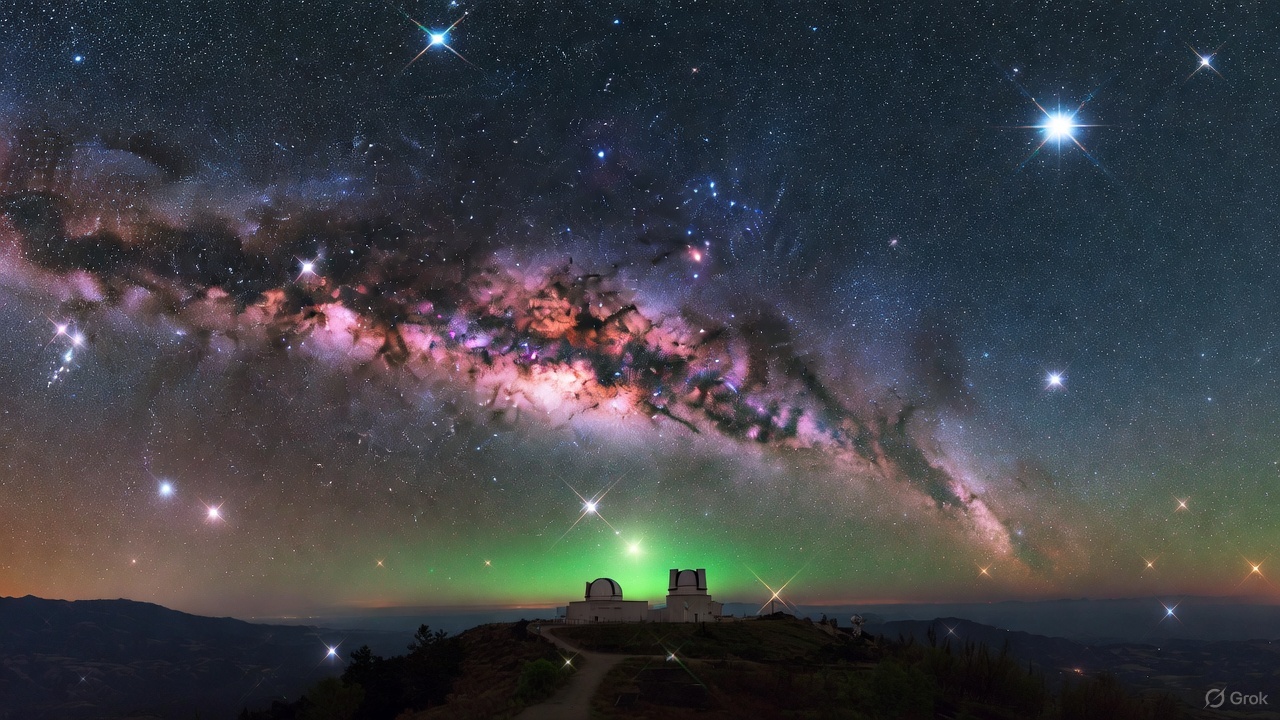
When you look up and see the bright band of the Milky Way, you’re not seeing the galaxy as it is now. You’re seeing ancient light that has spent tens of thousands of years racing toward your eyes at 299,792,458 meters per second – the speed of light.
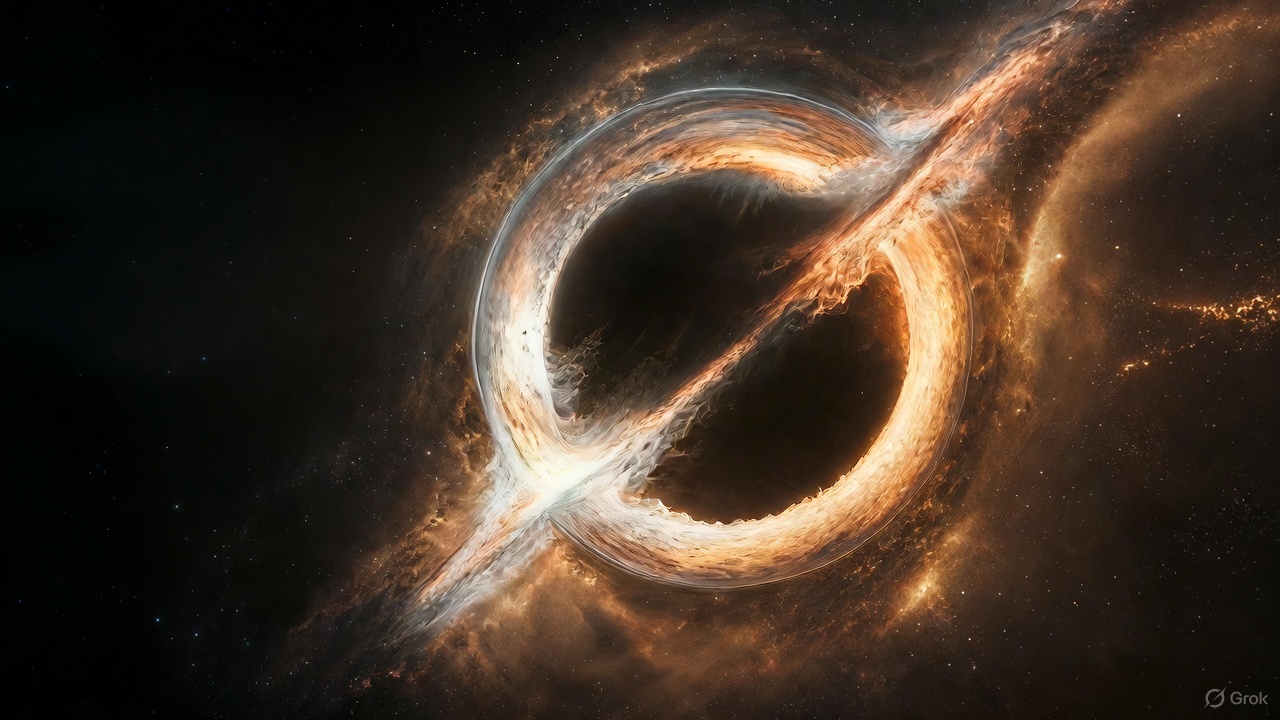
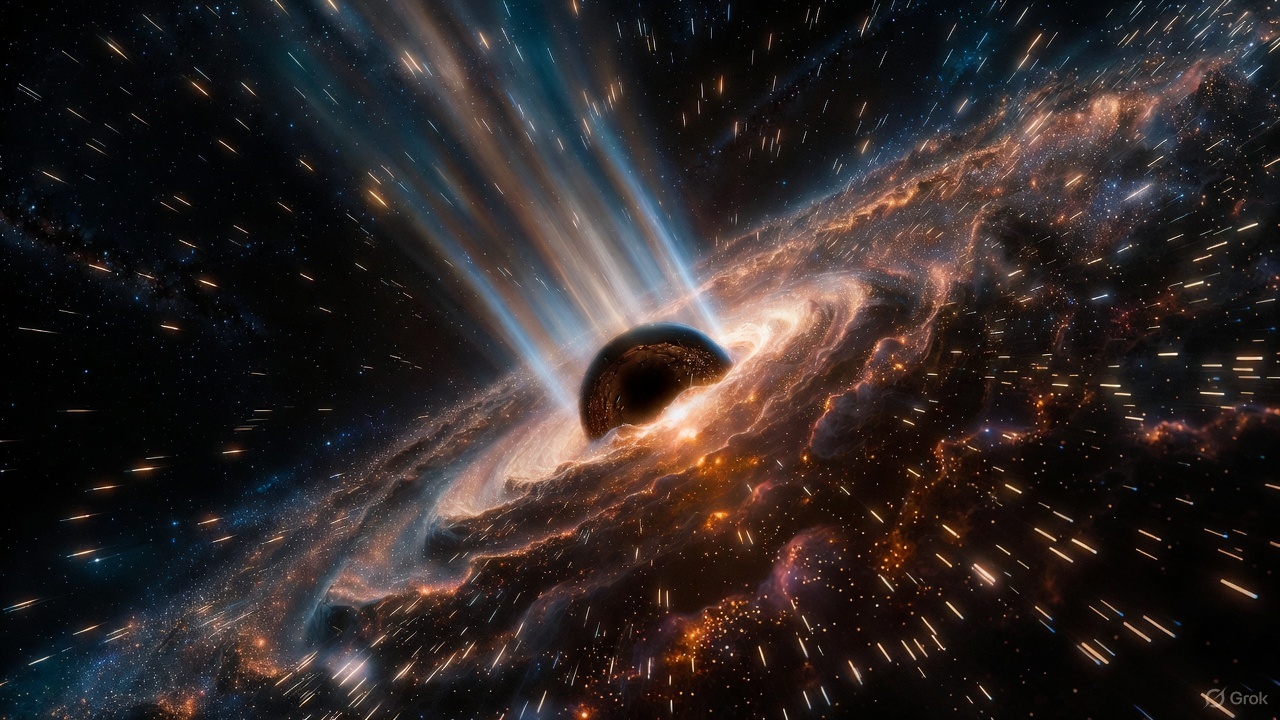
Our Sun orbits the center of the Milky Way, and that center hosts a supermassive black hole often called Sagittarius A*. It’s about four million times the mass of our Sun. The distance from Earth to that central region is around 26,000 light-years.
That means:
- The light from the galactic center you see tonight left when humans were still painting in caves.
- Any stars being stretched and torn by the black hole’s gravity are doing it “now” in their own time – but we won’t see that part of the story for thousands of human generations.
- Extreme gravity can slow time near a black hole. So the drama we eventually see might be stretched out, frame by frame, like a cosmic horror movie played in slow motion.
In this site, we play with the speculative idea that the “frozen” look of the Milky Way is partly an illusion caused by light-travel delay and time dilation. The real Milky Way could be far more chaotic and shredded by its own black hole than we can currently see.
Living in a Time-Lagged Universe
The Cosmic News Is Always Late
Imagine every star as a tiny broadcast tower. The news it sends out travels at light speed. That’s fast – but space is huge.
- The Sun is about 8 light-minutes away. When you watch a sunset, you’re seeing what the Sun was doing 8 minutes ago.
- The nearest big galaxy, Andromeda, is about 2.5 million light-years away. Its current headline news won’t reach us until long after humans are gone – if we don’t move there first.
- The Milky Way’s center? Again, at least 26,000 light-years in the past.
This delay alone means that everything in the sky is a memory – an old photograph still flying through space. Layer on time dilation near black holes, and the movie can look even more stretched, smeared, and frozen than it “really” is in its own frame of reference.
Spaghettification as a Stage Show
Now picture the central black hole as the main actor. Stars and gas clouds are the unlucky extras getting pulled in.
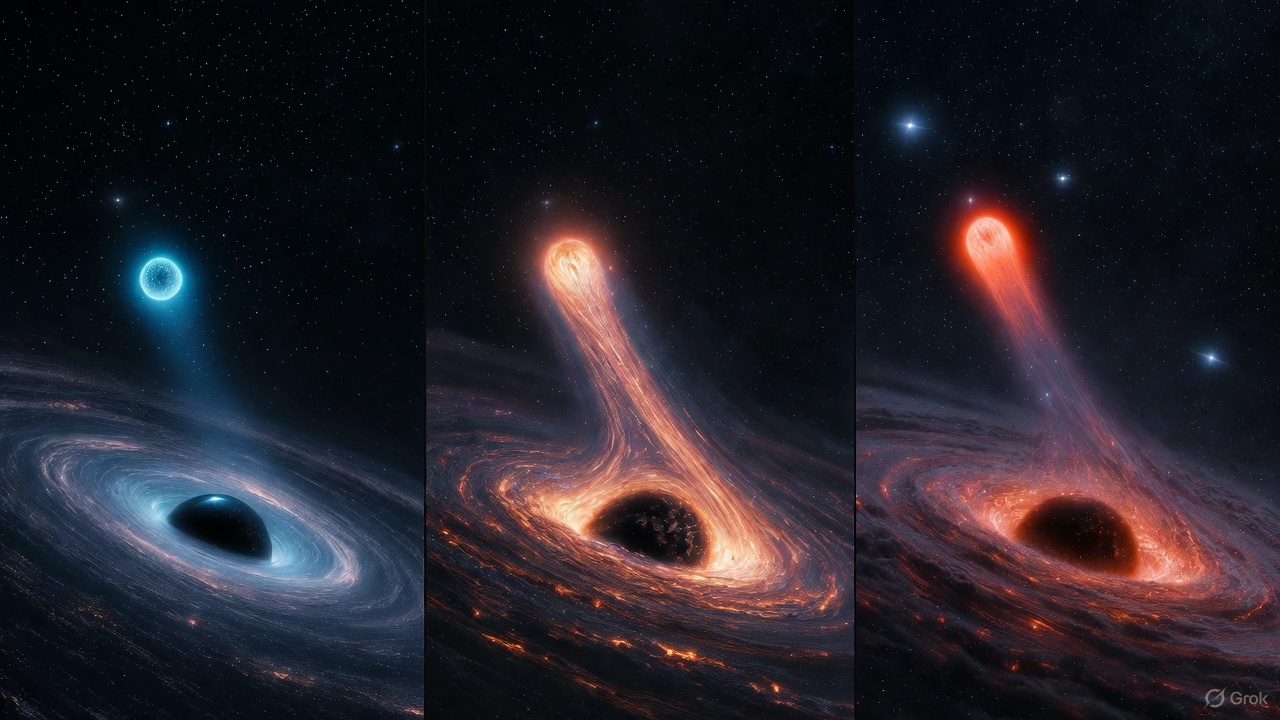
To someone falling in, things happen fast: orbit tightens, tidal forces rip them into long noodles, and they dive through the event horizon – the point of no return.
But to us, far away:
- Their motion slows as they approach the event horizon.
- Their light is stretched to redder and dimmer colors.
- They may appear to freeze and fade right at the edge.
The result is like a cosmic stage play we watch from the balcony, always a few acts behind and in slow motion. The real ending has already happened – but we’re still on the earlier episodes.
Space-Time Delay & Spaghettification Calculator
Timey Whimey Wibblely Wobbley
Use this toy calculator to explore how distance and time dilation can make the sky look like a frozen memory. It’s simplified for curious kids and adults – not a full-blown relativity simulator.
What the Numbers Mean
Exciting, Fun, and Honestly Terrifying
Basic Time Travel Projects
- Think of the Milky Way as a giant space slideshow that’s always 26,000 years behind.
- Imagine stars turning into glowing spaghetti as they fall toward the black hole in the middle.
- Build classroom experiments with flashlights and timers to model “late” information.
- Draw a comic about a brave star trying to escape the spaghettification zone. Do it while you still can.
For Adults & Night-Sky Fanatics
- Use the calculator to connect intuition with real numbers about light speed and relativity.
- Discuss the difference between speculative ideas and tested astrophysical models.
- Explore how telescopes effectively act as time machines, letting us observe cosmic history.
- Lean into the cosmic horror: the galaxy we live in might be quietly falling apart in a future we’ll never see.
Frozen-Pasta Gallery
He hates Mondays, but he loves when gravity turns entire stars into warm, meaty lasagna strands. Spoiler: we’re all on the menu, and the plate is already spinning toward the biggest food coma of all time.